
by Schloss, I. R., Pizarro, G., Cadaillon, A.M., Giesecke, R., Hernando, M.P., Almandoz, G.O., Latorre, M.P, Malits, A, Flores Melo, X, Saravia, L., Martín, J. Guzmán, Iachetti, C, Ruiz, C.
Alexandrium catenella dynamics and paralytic shellfish toxins distribution along the Beagle Channel (southern Patagonia)
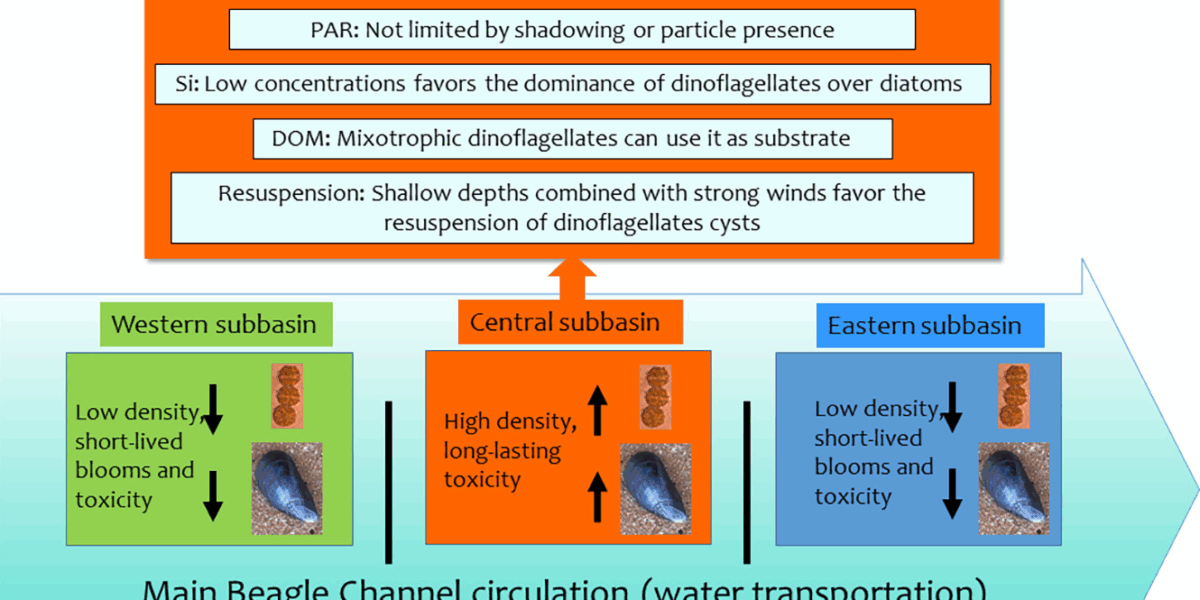
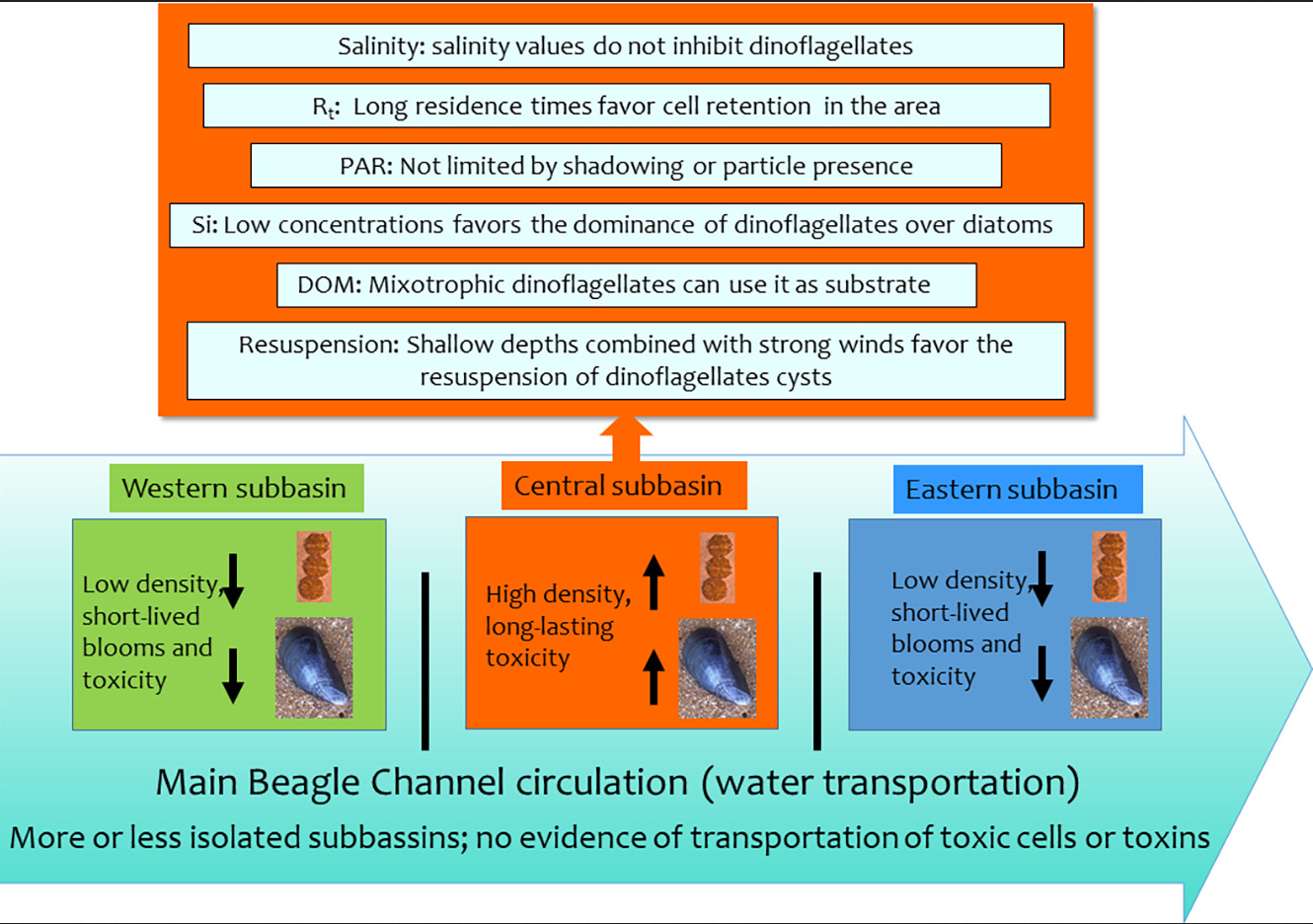
The Beagle Channel at the southernmost tip of South America is an interoceanic passage connecting the Pacific and the Atlantic Oceans. It is characterized by intricate coastlines and changing bathymetry, a dominant West to East circulation pattern, and a strong longitudinal gradient of glacial fresh-water discharge. Harmful algal blooms (HAB) and toxic outbreaks have been detected along the channel for the last two decades and monitored by both Chilean and Argentinean agencies. This unique scenario was used to try to answer whether HABs propagate from West to East along the channel following the main water flow, so that a sequential, spatial pattern can be identified, or if local dynamics due to particular hydrographic characteristics might favor HAB formation in different areas along the channel. For this analysis, we selected data from three austral spring-summer seasons, 2009–2010, 2010–2011, and 2012–2013, when by means of the mouse bioassay important concentrations of saxitoxins (STX) derivatives were detected in shellfish from different stations along the channel. Relevant information on hydrographical (temperature, salinity, bathymetry, main currents), chemical (macronutrients), and biological (cell abundance of the main species responsible for the toxic outbreaks in the channel, i.e. Alexandrium catenella) characteristics are analyzed. Results show that during the years when toxicity was highest, there was no evidence of West to East (longitudinal) transport of toxins along the channel. Contrastingly, smaller-scale patterns could explain the observed dynamics associated with three sub-basins previously described for the Beagle Channel, identified as western, central, and eastern regions. We built a conceptual model based on own and published data on bathymetry, PAR, salinity, water residence time, silicate availability, and DOM to understand the differences in HAB presence among the sub-basins, which allows explaining the higher toxicity values registered in the central part of the channel as compared to the western or easternmost regions.
by Schloss, I. R., Pizarro, G., Cadaillon, A.M., Giesecke, R., Hernando, M.P., Almandoz, G.O., Latorre, M.P, Malits, A, Flores Melo, X, Saravia, L., Martín, J. Guzmán, Iachetti, C, Ruiz, C.