
by N. Servetto, M.B. Ruiz, M. Martínez, L. Harms, M.C. de Aranzamendi, G. Alurralde, D. Giménez, D. Abele, C. Held, R. Sahade
Molecular responses to ocean acidification in an Antarctic bivalve and an ascidian
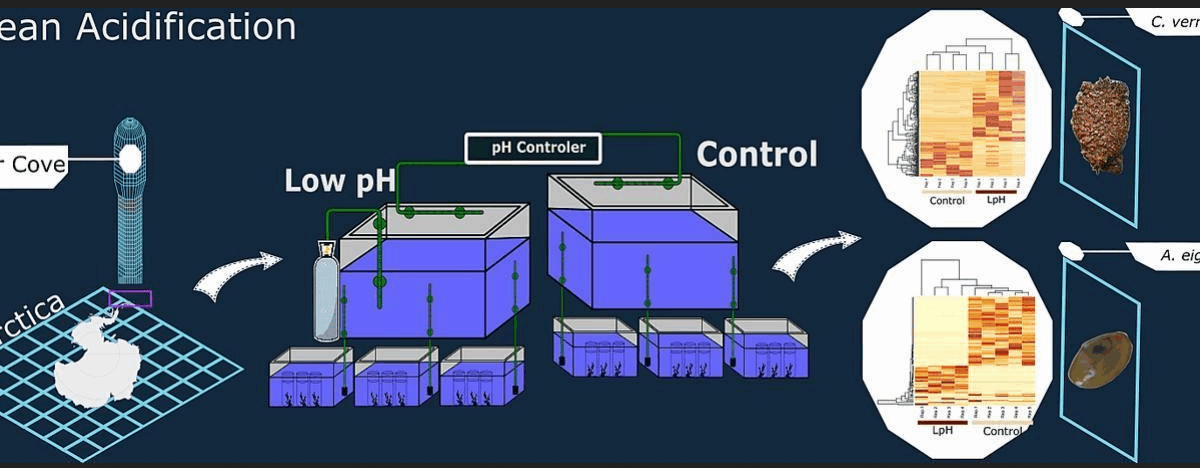
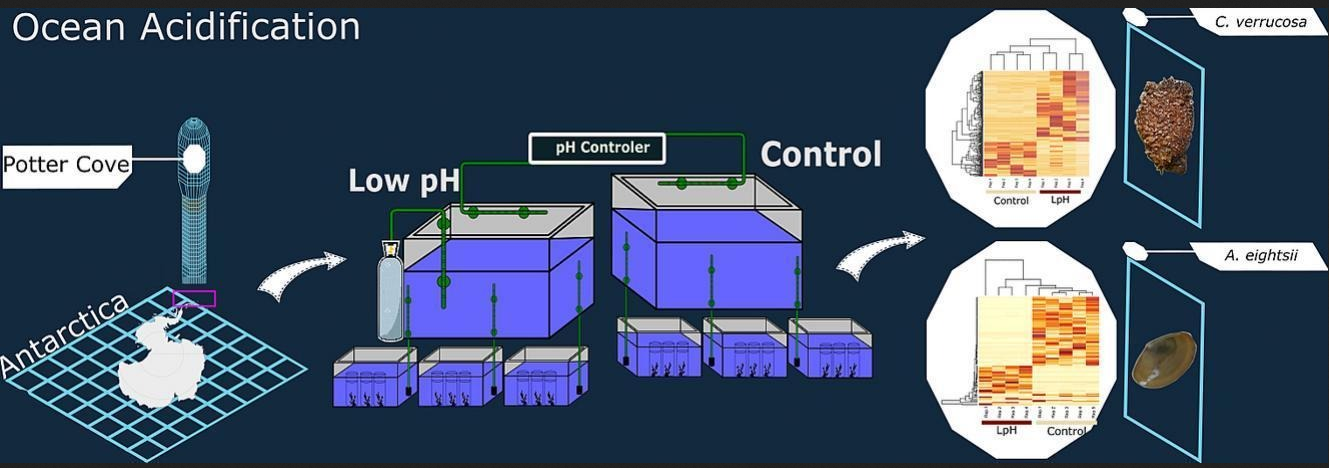
Southern Ocean organisms are considered particularly vulnerable to Ocean acidification (OA), as they inhabit cold waters where calcite-aragonite saturation states are naturally low. It is also generally assumed that OA would affect calcifying animals more than non-calcifying animals. In this context, we aimed to study the impact of reduced pH on both types of species: the ascidian Cnemidocarpa verrucosa sp. A, and the bivalve Aequiyoldia eightsii, from an Antarctic fjord. We used gene expression profiling and enzyme activity to study the responses of these two Antarctic benthic species to OA. We report the results of an experiment lasting 66 days, comparing the molecular mechanisms underlying responses under two pCO2 treatments (ambient and elevated pCO2). We observed 224 up-regulated and 111 down-regulated genes (FC ≥ 2; p-value ≤ 0.05) in the ascidian. In particular, the decrease in pH caused an upregulation of genes involved in the immune system and antioxidant response. While fewer differentially expressed (DE) genes were observed in the infaunal bivalve, 34 genes were up-regulated, and 69 genes were downregulated (FC ≥ 2; p-value ≤ 0.05) in response to OA. We found downregulated genes involved in the oxidoreductase pathway (such as glucose dehydrogenase and trimethyl lysine dioxygenase), while the heat shock protein 70 was up-regulated. This work addresses the effect of OA in two common, widely distributed Antarctic species, showing striking results. Our major finding highlights the impact of OA on the non-calcifying species, a result that differ from the general trend, which describes a higher impact on calcifying species. This calls for discussion of potential effects on non-calcifying species, such as ascidians, a diverse and abundant group that form extended three-dimensional clusters in shallow waters and shelf areas in the Southern Ocean.
by N. Servetto, M.B. Ruiz, M. Martínez, L. Harms, M.C. de Aranzamendi, G. Alurralde, D. Giménez, D. Abele, C. Held, R. Sahade